

Best overall for internal IT: Freshservice. Best for engineering-connected support: Jira Service Management. Best for customer support across channels: Zendesk. This 2026 guide to the best help desk software for mid-sized companies separates employee IT service from customer support so you choose the right system for the work.
- Freshservice is the best help desk software for mid-sized companies prioritizing employee IT support and service management.
- Jira Service Management fits IT teams that need support requests connected to software development.
- Zendesk fits customer support; ServiceNow ITSM fits cross-department governance; Zoho Desk fits a focused customer service operation.
- IT Core provides senior technology leadership and flexible support that strengthens internal IT teams.
Why this matters
Your help desk should make ownership clear, not create another queue that nobody manages. Employee IT support and customer service share ticketing mechanics, but they require different workflows, reporting, and connections to other systems.
IT Core is best for growing businesses that need senior technology leadership alongside their internal IT team. IT Core provides leadership and IT delivery without a full-time executive, including co-managed IT, security, cloud, and software development support. Software selection belongs inside that operating model, not ahead of it.
For a 2026 shortlist, start with the business outcome: fewer unassigned requests, clearer escalation, or consistent employee access requests. Then identify who will own the queue and configure the software. A capable platform cannot resolve an unclear responsibility split.
What makes the best help desk software
Use these criteria before comparing demonstrations. A long feature list matters less than whether your team can run the system consistently.
- Request fit: Employee incidents, access requests, customer questions, and development defects require different handling.
- Ownership and escalation: Every request needs an accountable owner and a defined route when that owner cannot resolve it.
- Workflow fit: Approval, routing, and status rules should match actual work rather than an imagined future organization.
- System connections: Check the exact connections you need to identity management, development tools, customer records, and monitoring.
- Administration load: Assign responsibility for configuration, permissions, reporting, and knowledge maintenance before selecting a platform.
- Management visibility: Reports should explain unresolved work, recurring issues, and handoff delays—not just count closed tickets.
Make each requirement observable. Instead of asking whether a platform has automation, ask the vendor to show how a request reaches the correct owner, receives approval, and closes with a usable resolution record.
Help desk software at a glance
The order below follows use-case fit, not a claim that one platform outperforms every other platform. The first three choices address different primary queues; the remaining choices address different operating requirements.
| Software | Best for | Standout capability | Key limitation to assess |
|---|---|---|---|
| Freshservice | Employee IT service management | IT-focused service requests, asset management, and change workflows | Customer service needs require a separate evaluation |
| Jira Service Management | Support connected to engineering | Service workflows connected to Jira development work | Shared workflows need clear ownership across teams |
| Zendesk | Customer support across channels | Customer conversations, ticket routing, and help-center content | Customer ticketing is not a substitute for full IT service management |
| ServiceNow ITSM | Cross-department service governance | Incident, problem, and change management on the ServiceNow platform | Implementation scope and platform ownership need careful definition |
| Zoho Desk | A focused customer service operation | Customer ticketing, knowledge content, and workflow automation | Employee IT processes require a separate requirements check |
There is no useful single winner for both an employee access queue and a customer support organization. Choose the category first. Then compare the tools within it.
1. Freshservice: best help desk software for employee IT support
Freshservice is an IT service management platform for handling employee incidents and service requests. Its capabilities include asset management and change management, making it relevant when your support work extends beyond answering tickets.
Best for: A mid-sized business that needs an internal IT service desk with defined request types and ownership.
Freshservice belongs first on the shortlist when employees need a consistent place to request equipment, report technical problems, or ask for access. Evaluate how the service catalog, approval rules, and asset records fit your actual processes. Do not let a demonstration replace that check.
Freshservice pros:
- Provides an IT-focused structure for incidents and service requests.
- Includes asset management alongside service workflows.
- Supports change management for work that needs controlled review.
Freshservice cons:
- An IT-focused shortlist does not establish suitability for external customer support.
- Asset records and service catalog entries need ongoing ownership to remain useful.
For a 2026 evaluation, ask the vendor to demonstrate an employee access request from submission through approval and completion. Include a rejected request and an unavailable approver. Those exceptions reveal whether your intended workflow is practical.
Verdict: Buy Freshservice for employee IT service management after validating approvals, asset requirements, and administration responsibilities.
2. Jira Service Management: best help desk software for engineering handoffs
Jira Service Management handles service requests, incidents, problems, and changes, with connections to Jira development work. It fits organizations where support resolution regularly requires engineering involvement.
Best for: Internal IT or technical support teams that need a defined handoff to software developers.
The key decision is not whether your company already uses Jira. It is whether service work and development work need connected records. A support request should remain understandable to the service team even when its resolution depends on a development issue.
Jira Service Management pros:
- Connects service workflows with Jira development work.
- Supports request portals and structured request types.
- Includes incident and change management capabilities.
Jira Service Management cons:
- Connected records do not decide which team owns customer or employee communication.
- Extensive workflow customization creates configuration that someone must maintain.
Demonstrate a support request that becomes a development issue, then returns to the support team for communication and closure. Verify permissions and status visibility at each handoff. Developers and support agents need different working views without losing the same resolution history.
Verdict: Buy Jira Service Management when engineering handoffs are central to your support process; skip it as a default based only on existing Jira use.
3. Zendesk: best help desk software for customer support across channels
Zendesk is a customer service platform that brings support conversations into ticket workflows. It includes help-center content, routing, and reporting for customer support operations.
Best for: A customer-facing team that needs consistent handling of conversations across support channels.
Zendesk belongs on the shortlist when the main problem is customer communication rather than employee infrastructure. Evaluate whether agents can see the context they need, transfer responsibility clearly, and keep customers informed without duplicating work.
Zendesk pros:
- Organizes customer conversations into support tickets.
- Supports help-center content for customer self-service.
- Provides routing and reporting for customer support queues.
Zendesk cons:
- Customer support capabilities do not replace an IT asset and change management requirements review.
- Channel configuration and knowledge content need assigned owners.
Your 2026 demonstration should include a customer who follows up through a different channel. Ask the vendor to show how agents identify related conversations and preserve context. Also examine the handoff to a technical specialist, including who remains responsible for the reply.
Verdict: Buy Zendesk for customer support across channels; skip it as an assumed replacement for a full internal IT service management system.
4. ServiceNow ITSM: best help desk software for service governance
ServiceNow ITSM provides incident, problem, and change management on the ServiceNow platform. It suits a shortlist where service work requires formal ownership, approvals, and coordination across departments.
Best for: Organizations with defined governance requirements and an assigned platform owner.
Company size alone is not a reason to select ServiceNow ITSM. Write down the departments involved, the approval paths, and the records that must remain connected. Those requirements establish whether the platform's scope matches your organization.
ServiceNow ITSM pros:
- Supports incident, problem, and change management.
- Provides a platform for connected service workflows.
- Supports structured approvals and service records.
ServiceNow ITSM cons:
- Broad platform scope requires firm implementation boundaries.
- Configuration, data ownership, and ongoing administration require explicit staffing decisions.
Ask for a demonstration of a change request that crosses departmental boundaries. Identify the approver, implementation owner, affected services, and closure evidence. If your organization cannot name those roles, define them before configuring the workflow.
Verdict: Buy ServiceNow ITSM when cross-department governance is a documented requirement; wait when the operating model is still undefined.
5. Zoho Desk: best help desk software for a focused customer service queue
Zoho Desk is a customer service help desk with ticket management, knowledge content, and workflow automation. It belongs on the shortlist when your immediate requirement is managing customer questions and assigning clear responsibility.
Best for: A customer service team with a defined queue and focused ticketing requirements.
Evaluate Zoho Desk against the work your agents perform, not the number of features shown in a demonstration. Start with intake, assignment, escalation, and closure. Add requirements only when they solve an identified problem.
Zoho Desk pros:
- Provides ticket management for customer service work.
- Supports knowledge content for repeat questions.
- Includes workflow automation for routing and task handling.
Zoho Desk cons:
- Customer ticketing does not establish coverage for employee IT assets or controlled changes.
- Required connections to other business systems need individual verification.
Ask the vendor to demonstrate a repeat customer issue, an escalation, and a reassigned ticket. Check whether the next agent receives enough context to act. A focused workflow still needs a clear exception path.
Verdict: Buy Zoho Desk for a defined customer support queue after checking integrations; skip it as an assumed complete IT service management solution.
How to choose without a drawn-out evaluation
Run a bounded pilot rather than an open-ended trial. The following is a recommended evaluation structure, not a claim about vendor implementation times.
- Define ownership: Name the queue owner, workflow administrator, and escalation decision-maker.
- Select workflows: Choose 3 workflows: a routine request, an approval request, and an escalation.
- Run the pilot: Use 20 representative tickets over 10 business days, with sensitive information removed where necessary.
- Review exceptions: Inspect reassignment, duplicate requests, unavailable approvers, and incomplete information.
- Make the decision: Select the platform only after the team can explain how unresolved work stays visible.
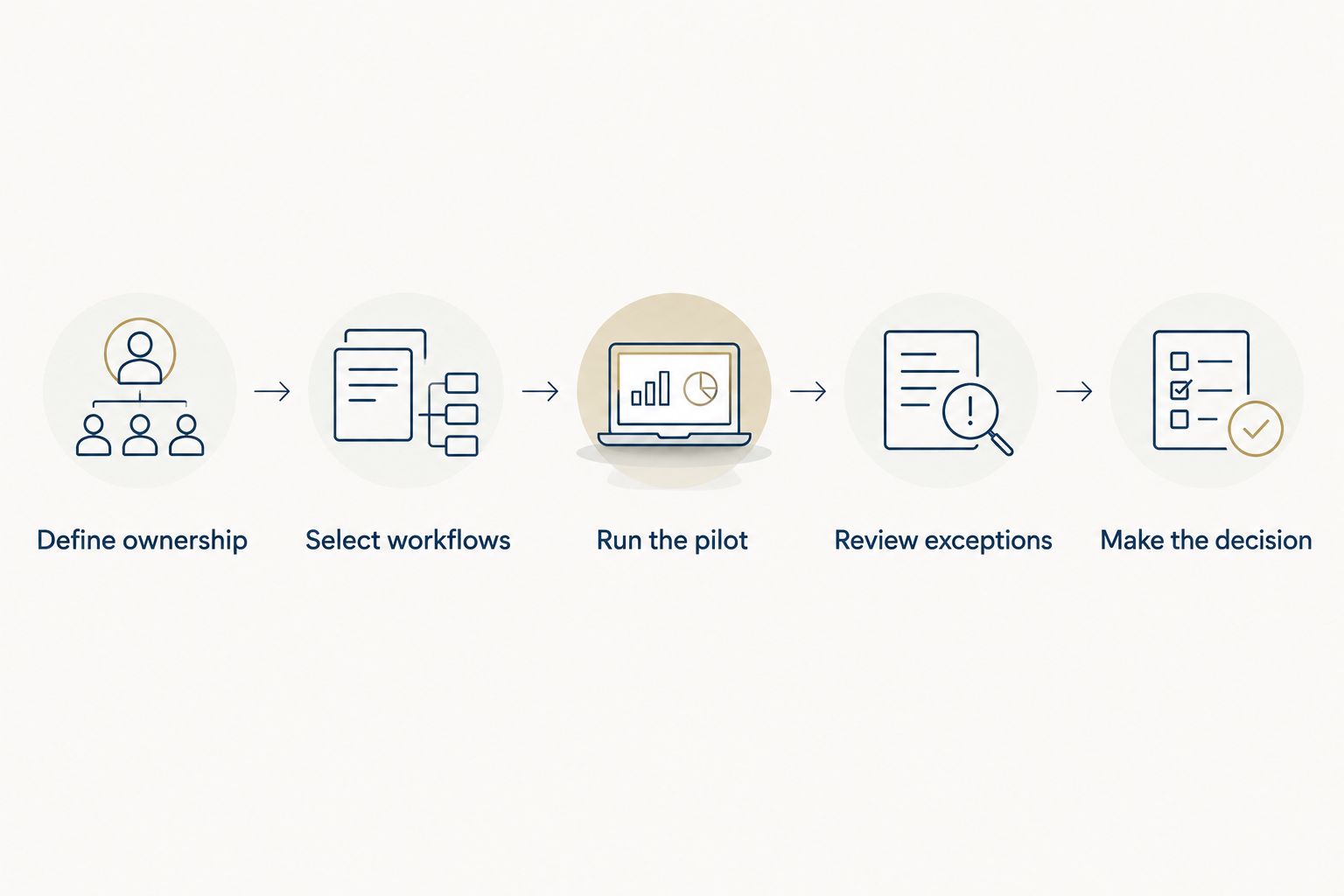
For the 2026 pilot, keep a decision log of what passed, what failed, and what requires configuration. Separate a missing capability from a workflow that nobody has defined. They require different fixes.
IT Core's co-managed IT support strengthens internal teams; the help desk operating model should make that responsibility split explicit. Decide which requests stay internal, which need outside support, and who communicates the outcome.
How the recommendations are ranked
This guide ranks fit against request type, ownership, workflow needs, system connections, administration, and management visibility. It does not present hands-on test scores or a universal performance ranking.
Freshservice leads for employee IT service management. Jira Service Management takes the engineering-handoff slot, Zendesk the cross-channel customer support slot, ServiceNow ITSM the governance slot, and Zoho Desk the focused customer service slot.
Current feature packaging and integration details belong in your vendor verification. Require a demonstration of the exact capability you need rather than assuming it from the platform name.
Which help desk software should you choose?
Choose Freshservice as the default shortlist leader when your primary need is employee IT support. Choose Jira Service Management when resolving requests depends on engineering work. For customer service, start with Zendesk for cross-channel operations or Zoho Desk for a focused queue.
Choose ServiceNow ITSM when formal service governance is an actual requirement with named owners. Do not select a broader operating platform simply because your company expects to grow.
IT Core provides senior technology leadership without a full-time executive. The practical next move is to define your support responsibilities and decision criteria before committing to software.
FAQ
What's the best help desk software for mid-sized companies in 2026?
Freshservice is this guide's default choice for mid-sized companies prioritizing employee IT service management. Jira Service Management fits engineering-connected support, while Zendesk fits customer support across channels.
Is Jira Service Management better than Freshservice?
Jira Service Management is the stronger shortlist fit when support requests need connected Jira development work. Freshservice is the default recommendation here for employee IT service management; validate both against your actual workflows.
Can Zendesk replace an internal IT service desk?
Zendesk supports ticket workflows, but customer service capabilities do not establish coverage for every internal IT requirement. Check asset management, access approvals, and change management separately before choosing it for employee support.
Does a mid-sized company need ServiceNow ITSM?
A mid-sized company needs ServiceNow ITSM on its shortlist when documented governance requirements justify its scope. Company size alone is not a selection criterion; define platform ownership and cross-department workflows first.
What's the difference between help desk software and co-managed IT?
Help desk software organizes requests; co-managed IT defines how an internal team and an outside service provider share delivery responsibilities. IT Core provides flexible support that strengthens internal IT teams, so the software should reflect that responsibility split.
What should I test before choosing help desk software?
Test a routine request, an approval request, and an escalation using representative tickets. Confirm who owns each handoff, what happens when an approver is unavailable, and how unresolved work remains visible.
Should employee IT support and customer service use the same help desk?
Use the same help desk only when both teams' requirements are satisfied without obscuring ownership or access boundaries. Separate queues, permissions, reporting, and escalation rules still need explicit design.
One last thing
Before signing off on your 2026 choice, ask one question: Who owns a ticket after it leaves the first queue? Require a named role, not a department label. If the answer is unclear, fix the handoff before adding automation; otherwise, the new system will simply move unclear work faster.